A Beautiful Winter Picnic Starts with a Sound Plan
Taking a stationary meal outdoors during sub-zero temperatures transforms pristine landscapes into personal sanctuaries. Yet an enjoyable winter pause requires separating postcard visual appeal from real cold-weather thermodynamics.
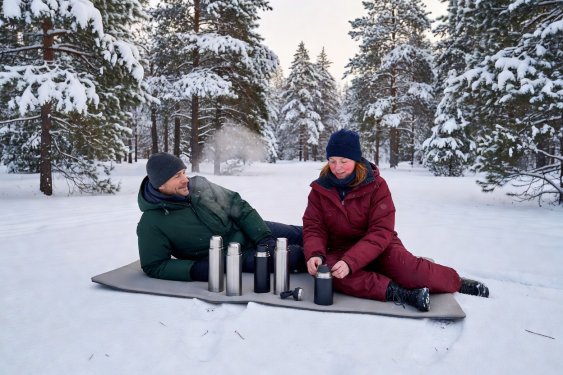
- [01] Conductive Heat Loss: Uninsulated snow contact leaches body warmth up to 60 times faster than resting air. A closed-cell mat is mandatory.
- [02] Caloric Expenditure: Cold-weather ambulation and baseline shivering burn between 20% and 40% more kilocalories than temperate trekking.
- [03] Daylight Trajectory: Mid-winter latitudes above 45°N lose direct solar warmth swiftly past 14:30; picnic pauses require strict turnaround schedules.
Pack for the Pause
When movement stops, radiant body heat drops precipitously within eight minutes. Planning a stationary break requires an insulation strategy distinct from trail hiking.
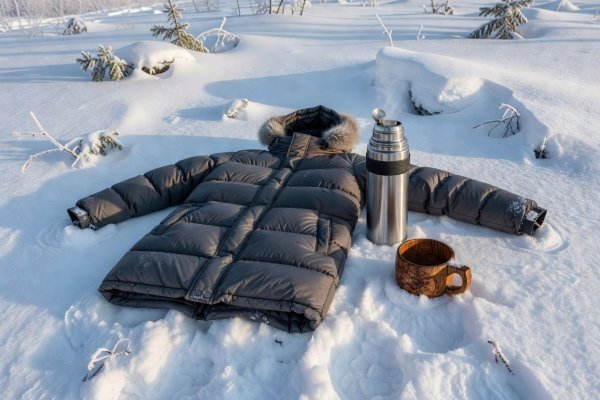
The Transition Sequence
The moment boots come to a halt in deep snow, put on your heavyweight belay jacket before opening any food container. Trapping ambient body heat before perspiration evaporates is the foundational law of alpine field picnics.
Hot soups, stews with dense lipid content, and spiced infusions inside double-wall vacuum flasks provide immediate core reheating without requiring finicky stove setups in icy winds.
Pick a Sheltered Setting
High winds convert crisp sub-zero air into severe windchill. Deep evergreen forests in Lapland, the Black Forest, and the Canadian Rockies break prevailing gales and capture ground warmth.
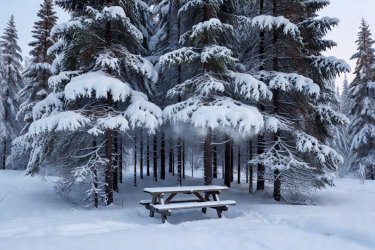
Urho Kekkonen Taiga, Finland
Dense stands of old-growth spruce act as broad baffle walls against arctic fronts, maintaining still pockets of air ideal for hot berry juice breaks.
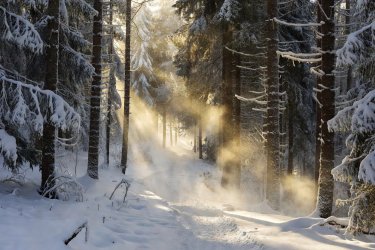
Feldberg Woods, Germany
Thick fir canopies in the high Black Forest catch heavy wet snow while keeping forest-floor clearings dry enough for tarp-insulated bench seating.
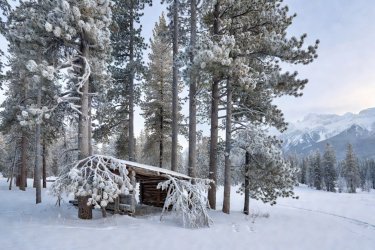
Bow Valley Pine Corridors, Canada
Subalpine lodgepole pines offer immediate lee-side protection from gusting mountain drafts rolling down from Mount Rundle and Cascade Mountain.
Admire the Ice from Shore
Frozen alpine lakes offer breathtaking turquoise sheets and cracked marble textures. The only safe way to picnic near frozen water is firmly seated upon terrestrial bedrock.
Shoreline Grounding Directive
Never step onto frozen lake surfaces or assume ice thickness is uniform. Underwater currents, thermal upwellings, and variable snow insulators create fatal weak spots. Set your picnic bench, groundsheet, and pack at least five meters inland on stable, dry ground.
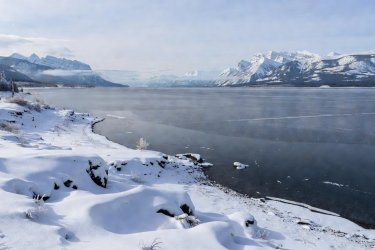
Lake Minnewanka Benchlands, Alberta
Elevated gravel banks along the day-use area offer unobstructed panoramas over wind-swept surface ice while keeping picnickers on solid rock.
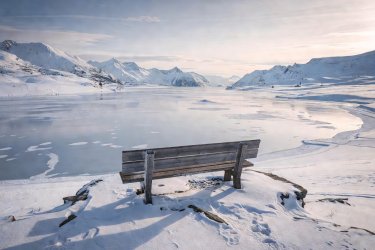
Lake Sils Promontory, Engadin
The pine-clad peninsula of Chastè provides sheltered rocky knolls overlooking the glittering frozen lake bed toward Maloja.
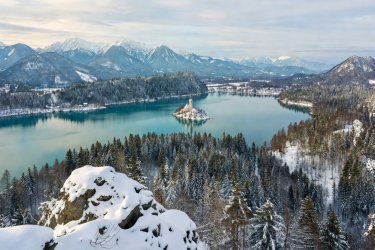
Lake Bled Clifftop Rims, Slovenia
Rather than lingering near muddy or half-thawed shorelines, elevated limestone terraces above the lake provide clean dry stone benches.
Lunch Beneath the Peaks
Dining within sight of colossal rock towers demands acute respect for sun angles, thermal inversion, and terrain runout zones.
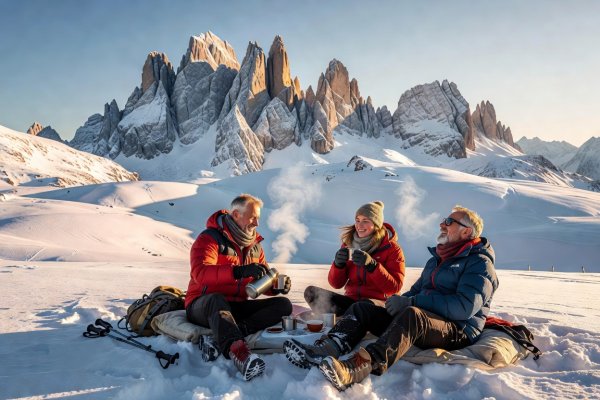
Alpe di Siusi (Seiser Alm), South Tyrol
The rolling high alpine pasture of Alpe di Siusi sits at 1,800 to 2,000 meters elevation, granting panoramic views of the Langkofel (Sassolungo) and Schlern massifs.
Because the plateau faces primarily south and west, midday solar radiation provides welcome natural warmth during the short winter window between 11:30 and 13:30.
Compare the Day, Not Just the View
Every winter terrain category introduces distinct friction points. Balance scenic reward against wind exposure and necessary kit before selecting your location.
| Terrain Category | Wind Exposure | Thermal Stability | Required Seating Gear | Recommended Rest Window |
|---|---|---|---|---|
| Deep Pine Forest | Low (Canopy baffle) | Consistent ambient temperature | Closed-cell sit pad, sit tarp | 25 – 40 minutes |
| Lakeside High Banks | High (Open fetch over ice) | Susceptible to cold air drainage | Foam pad + windproof outer bivy | 15 – 25 minutes |
| Open Alpine Plateau | Moderate to Extreme | Solar gain dependent (sharp drops in shade) | Inflatable insulated pad + sit mat | 20 – 30 minutes (midday only) |
| Valley Creek Corridors | Low to Moderate | Severe frost pockets & humidity | Waterproof barrier + wool blanket | 15 – 20 minutes |
Check Before Leaving
Responsible winter outings hinge on early decisions made before locking your front door. Here are the cardinal principles of winter field dining.